
Concrete measures in our production.
Local production and quality
STAHLWILLE attaches great importance to acting responsibly. Many of our tools, including ratchets and torque wrenches, can be repaired. Through spare parts, repairs, maintenance and calibration, we help to ensure a long service life and guarantee quality over the whole product life cycle. A major proportion of our production takes place at our German sites.
Packaging solutions with reduced plastic content and recyclable packaging solutions
For customer shipments we strictly limit the use of plastics and avoid it completely where technically and functionally possible. Instead we use, amongst other things, solid cardboard, recycled paper and paper-based wet adhesive tape. In addition, we employ machines to produce padding strips from recycled paper. Our use of plastic strapping has been reduced by 90% since 2024. The vast majority of the products from our tool assortments are shipped in TCS mats in cardboard boxes with paper padding. Labelling and disposal instructions are provided in accordance with the applicable legal requirements.
Reduced energy consumption
In 2023, STAHLWILLE achieved energy savings of 525,230 kWh through targeted measures, corresponding to 5.56% of our total energy consumption. The measures include more efficient production processes, LED lights in the production shops, a new compressed air management system (SAM 4.0) and a new heating control system. As a result, a total of 127,363 kg of CO₂ emissions were avoided, of which 36,831 kg was through electricity savings and 90,532 kg was through gas savings.
Sophisticated product development
We take repairability and the availability of spare parts into consideration right from the product development stage. For many tools, we offer spare parts and repair kits beyond the periods required by law; for many of our tools, spare parts are still available even after more than 30 years. Where technically feasible, we use recyclable materials and common parts to reduce the number of variants and hence the costs associated with logistics, storage and production provision.
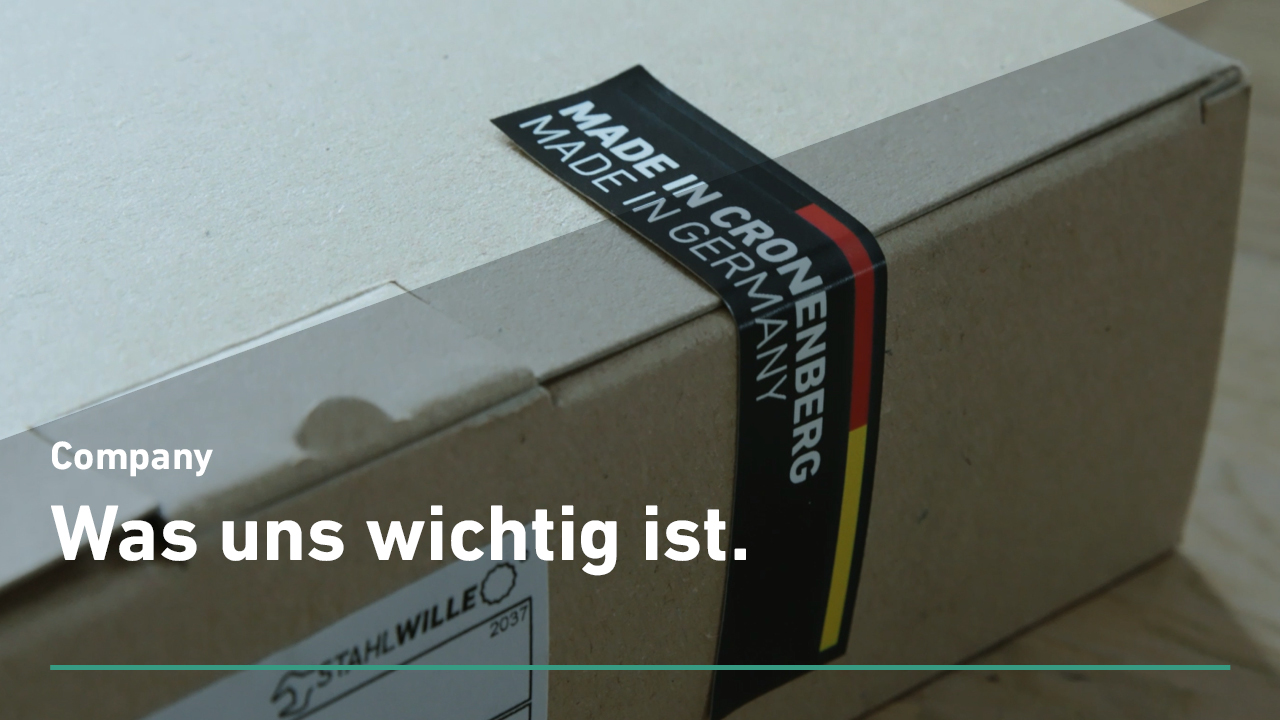
What matters to us.
Our tools, our responsibility.
Certificates
STAHLWILLE operates with certified management systems: quality management in accordance with DIN EN ISO 9001:2015, energy management in accordance with DIN EN ISO 50001:2018 with the aim of improving energy efficiency by 2% per year, environmental management in accordance with DIN EN ISO 14001:2015, and a calibration laboratory in accordance with DIN EN ISO/IEC 17025:2018. The certifications confirm compliance with the respective requirements of these standards.
Statutory requirements
STAHLWILLE meets all the requirements of the REACH Regulation applicable to our products and processes and is a specialist company under the Germany Water Resources Act. As part of our production processes, we are gradually switching from chromium(VI) to chromium(III). We also comply with the requirements applicable to us under, for example, the RoHS Directive, battery legislation and circular economy legislation.
Sustainability policy
Our own sustainability policy lays out standards for working conditions, ethics, and responsible environmental management. It includes the commitment to guaranteeing fair wages, freedom of association, the prohibition of child and forced labour, and the rejection of discrimination and corruption. The policy rules out the use of raw materials of questionable origin and defines measures for comprehensive occupational health and safety, as well as accident and incident management. It also aims to continuously optimise the use of water and energy and to reduce waste.
Code of Conduct
Our Code of Conduct sets out requirements for our collaboration with suppliers and business partners. It defines standards for working conditions, ethics, compliance and environmental protection. It contains, amongst other things, provisions against child and forced labour, discrimination, unlawful anti-competitive agreements and illegal conduct, as well as requirements regarding the handling of raw materials from high-risk areas. We expect our suppliers to also comply with these directives and reserve the right to carry out appropriate checks and audits.
VSME sustainability report
Our VSME report transparently presents key performance indicators, measures and targets in the areas of the environment, social responsibility and corporate governance. It is based on the ‘Voluntary Sustainability Reporting for SMEs (VSME)’ standard and documents, amongst other things, data and measures relating to resource and energy use, production processes, as well as quality and product lifespan. In this way, we provide customers, partners, and employees with transparent information about our activities and progress.